Why is it so hard?
Because we believe it should be other than it is.
Chanukah, Christmas, Kwaanza, Solstice,
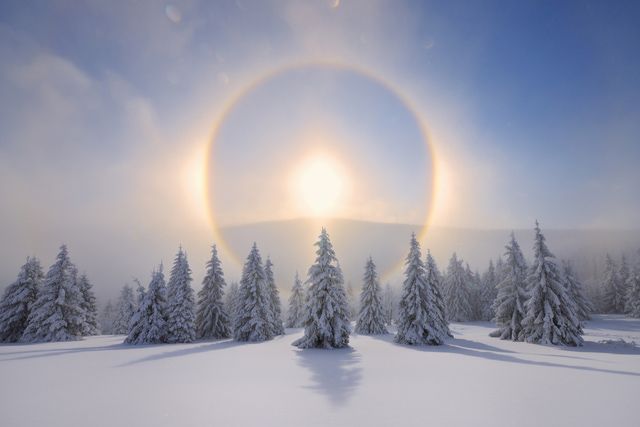
It’s all about the light
The light that comes and goes,
And the Light that is within and all around and ever-present
We tend to celebrate when the light that comes and goes returns,
The dawn, the Solstice
As if the coming and going darkness is a burden,
When it’s simply the time for rest, for silence, for stillness.
The real burden is when the Light that is ever-present
Seems to us to be gone.
First off, don’t confuse the two lights
Then re-member the Being of Light that you ARE,
And all that is…. IS.
Those lines came to me this morning, Solstice morning, as I was meditating. So I thought to share them with you. I also want to share the beautiful writing from Geneen Marie Haugen, of the Amimas Valley Institute, with her reflections on the Solstice and the ancient wisdom of our ancestors. See just below.
If these thoughts interest you, and you want to explore experientially, please check out my upcoming online course, Cultivating the Inner Tree of Life, starting January 18th. I’d love to have you join me in the exploration. Please know that if cost is an issue, you can contact me for our sliding scale fee. And please feel free to share this with anyone you think would be interested.
Blessings for appreciating the cycles of light and dark and the ever-present Light of Spirit.
Alan
——-
Worthy Ancestors
At Newgrange in Ireland, the morning Sun on winter Solstice illuminates a passage into the deep heart of the ancient monument. The enormous, rounded tomb, created by human hands more than 5,000 years ago, is believed to be older than Stonehenge and older than the Giza pyramids.
Once upon a time, I was inside that passage with a few others and a guide when the luminous effect of winter Solstice morning was simulated with electricity. Even though I knew the shafted light was a technological creation, I felt something akin to astonishment. How many generations of ancient people had devoted precise attention to the exact position of the rising Sun on Solstice, I wondered — and what immeasurable number of years had it taken to build the passage tomb? How it had been decided whose bones would rest there? How could this not be the work of multiple generations situating themselves and their descendants in relationship with cosmic mysteries?
Another year, I walked among the standing stones at Nether Largie in Kilmartin Glen, Scotland, trying to imagine the people who had raised them, trying to imagine those who had carved the rock with the still visible depressions known as “cups,” as well as the surrounding rings that were now mostly worn away. If these stones were intended as a lunar observatory — as it is currently believed — what had called the people to track for generations the Moon’s course across the sky? How had they known to give attention to the Moon’s distance from the horizon over a cycle that repeats every 18.6 years — a cycle of which I had not even been aware?
As I wandered among those lichen-crusted stones, I felt the faint presence of Old Ones, as if I were entangled in a field of living psyche that spans eons. What devotion these ancient people must have had to erect stones that still stood thousands of years later amidst Kilmartin Glen’s extensive series of burial cairns. My skin prickled a little, as if a breeze had passed by. I considered how these haunting monuments marked ancient conversations with the mysteries of the cosmos as well as with the mysteries of death. How many generations of intimate attention, how many years of tremendous human effort were necessary to move stones into position? Did the monument builders imagine that people from the far distant future would wander here and wonder about them? What had called them to this task?
All over the world, natural markers or built monuments track the changing positions of Sun and Moon, particularly at Solstice and Equinox. Some years ago, when I lived with a clear view to the horizon in all directions, I lined up stones to mark the position of the Sun coming into sight and disappearing again at Solstices. I knew from my calendar when the longest or shortest day occurred, so — unlike ancient people — I did not need to offer precise attention to the solar journey. But even laying out the stones around my house disrupted my everyday thoughts and connected me in some way with the monument builders.
I have wondered: are there enduring structures of equivalent devotion, from our own time that honor — or even acknowledge — the greatest mysteries? If our civilization ended now, how would future minds regard the remnants of our industrial complexes, pipelines, war machines, strip mines? Data centers and shopping malls? I could hardly bear to imagine a future in which artifacts marking the worst of our civilization were preserved rather than elegant made-of-Earth monuments, art, music, and registers of our greatest visions, possibilities, and dreams for the planetary community. I could hardly bear to imagine a future in which the spectacular expressions of the wild Earth had been razed, or where the feral ones had all been erased along with mystics, poets, children, artists, and others who were ill-suited to advance the project of modernity.
***
It’s winter Solstice now in the Northern hemisphere, the longest night of the solar year. It’s a velvet, alluring darkness that long-gone ancestors might have wrapped around themselves like a cloak. In our own time, many in the human family might feel that there is a darkness of another kind on the land. Even inhabitants of the sunny Southern hemisphere might feel a certain heaviness, a blanket of uncertainty, a clashing jumble of values and worldviews.
In these turbulent times, when the clear trail ahead is obscured, I’m taking breaks from the awful cycle of news to reflect on cycles of greater magnitude or meaning, eras and creations of more lingering significance — like those standing stones and burial mounds and other artifacts left by Old Ones. Those monuments took generations of dedication to mystery to bring into form. No one who began them lived to see them finished. And perhaps something like this is true for us, that the visionary projects being seeded and tended now, those that honor both mystery and the Earth community, will take generations to bear fruit.
At Solstice, may we be fortunate to gather with dear ones to honor both the Old Ones and the future ones whom we pray will be here several generations from now. We may never know if we will be regarded as worthy ancestors, but perhaps, for guidance, we can look to some of those who came before us.
— Geneen Marie Haugen